
EMDR Therapy
Oakland, California
The past doesn’t have to define your future
Are ongoing weekly sessions not ideal for you?
An EMDR Therapy Intensive may be exactly what you’re looking for!
Does this sound familiar?
You react more strongly than you'd like in certain situations. Small conflicts or comments can leave you feeling overwhelmed, anxious, or completely shut down.
It may feel like you're constantly walking on eggshells, bracing for something to go wrong. You might over-apologize, withdraw, or lash out and then feel regret or confusion afterward. During moments of stress, your body may tense up, your heart races, or your thoughts start to spiral.
You may find yourself avoiding certain conversations, people, or places simply because of how they make you feel. Even when nothing seems wrong on the surface, there might still be a part of you that doesn't feel at ease.

Want to see progress without months of weekly sessions?
Ready to get to the root of the problem, not just manage symptoms?
Need more time than 50 minutes to actually dig in and do the work?
Let’s dive in!
What is EMDR?
EMDR, which stands for Eye Movement Desensitization and Reprocessing, is a structured therapy that helps people process and heal from past experiences that still feel emotionally charged or overwhelming. These experiences might include childhood abuse or neglect, periods of acute stress, or unexpected loss that continue to shape how you see yourself and the world.
When something distressing happens to us, our brains can have trouble processing what happened. As a result, the memories of these events don't get filed away like most other memories. Instead, they stick around in a way that can leave us feeling haunted by that past—like it's still with us in the present. This can, understandably, make us feel anxious, reactive, or overly self-critical in our day-to-day life.
EMDR helps the brain do what it naturally wants to do, which is to fully process and resolve these memories so they no longer carry the same emotional weight.
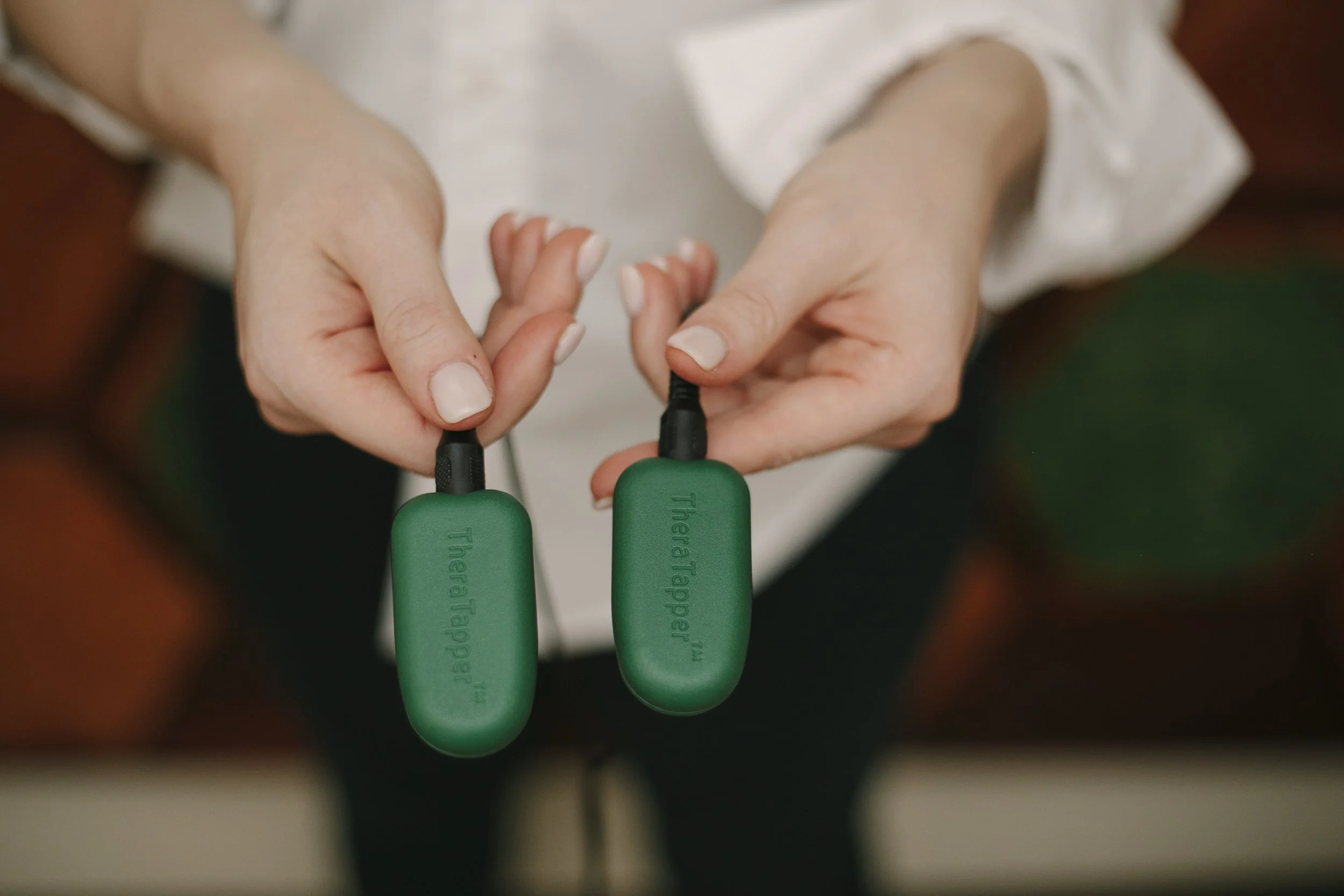
In an EMDR session, you are gently guided to bring up a memory while engaging in a type of rhythmic stimulation, such as following a light with your eyes or tapping on your hands. This back-and-forth movement helps your brain reprocess the experience while the memory is being recalled. Over time, the memory becomes less triggering, and your beliefs about yourself often shift in a more positive and empowering direction.
EMDR is famously effective for treating PTSD, but can be effectually used to address most mental health symptoms, including anxiety, depression, burnout, and more. As an EMDRIA Certified Therapist, I bring advanced training and supervised clinical experience to every intensive.

What is an EMDR Therapy Intensive?
Unhurried time to process trauma, reshape patterns, or expand performance goals.
An EMDR therapy intensive is a focused, short-term therapy format that allows for deep, accelerated healing over the course of a few powerful days. Instead of meeting for weekly 50-minute sessions, we work together for 12 hours (typically in chunks of 2-3 hours at a time) within a 2 weeks span.
This approach is ideal if you’re feeling stuck, overwhelmed, or ready to move through something specific without the stop-and-start of weekly therapy.
It can help you make meaningful progress in a fraction of the time, often reducing the total number of sessions needed overall.
Throughout the intensive, you’ll move through multiple rounds of EMDR with regular breaks for grounding, reflection, and nervous system regulation. I’ll support you in staying centered and resourced throughout the process.
Afterward, it’s normal to feel emotionally tender or mentally tired as your brain continues to process. I’ll help you prepare for post-intensive care and offer follow-up support to integrate what we’ve worked through.

Why Choose a Therapy Intensive?
An Intensive is effective and efficient.
Save time. Weekly therapy often includes hidden time costs such as travel, settling in, and wrapping up. With EMDR intensives, every minute is focused time. You receive more support in fewer sessions without the weekly logistics.
Get more value. Research shows that intensives can be more effective than weekly sessions. While the upfront cost is higher, they often lead to faster progress and can save you time and money over the long term.
Feel better faster. Start feeling more focused at work, more present at home, and more at ease in your downtime without waiting months for results.

Imagine this...
You're moving through your day with a steady sense of calm, even when challenges arise. You're able to respond instead of react, staying grounded in situations that used to overwhelm you. Small conflicts no longer feel like threats, and you don't carry the weight of constant tension or fear.
You trust yourself to speak up without over-apologizing, to set boundaries without guilt, and to stay present in the moment. Your body feels more relaxed, your thoughts clearer, and you feel emotionally safe in more places, with more people. Life feels less like something to brace against and more like something you can meet with confidence and ease.
What happens during an EMDR therapy session:
In a session, you'll be gently guided to bring up a memory while engaging in rhythmic bilateral stimulation such as following a light with your eyes or tapping on your hands. This back-and-forth movement helps your brain reprocess the experience while the memory is being recalled.
Sessions are structured but never rushed. There's time to settle in, access what's ready to be worked through, and move at a pace that feels safe. As we progress, the memory becomes less triggering, and the beliefs you hold about yourself often begin to shift in a more positive and empowering direction.
Benefits of EMDR Therapy for Trauma Recovery
EMDR gets to the root of why certain situations feel overwhelming, triggering, or impossible to move past, rather than just managing symptoms on the surface.
Benefits include:
Reduced emotional reactivity, so situations that once felt threatening become easier to navigate
Nervous system regulation, meaning you’re less likely to experience tension, racing heart, and spiraling thoughts
Shifts in self-perception, movingbeliefs about yourself move in a more positive, empowering direction
Faster results. Recommended by the WHO and the VA as a first-line treatment for trauma, EMDR often works more quickly than traditional talk therapy.
Broader symptom reliefthat’s effective for PTSD, anxiety, depression, burnout, and more.
For those who haven't found relief through traditional approaches, KA-EMDR can enhance these benefits by pairing EMDR with ketamine to reduce resistance and open the door to deeper healing.

EMDR Intensives: Options for Quick Trauma Processing
If weekly sessions don't fit your life, or if you're ready to move through something specific without the stop-and-start pace, an EMDR Therapy Intensive may be the right fit. Instead of 50-minute weekly appointments, we work together for focused 3-hour sessions within a condensed timeframe, allowing for deeper, uninterrupted processing.
For those who need to go even further, Ketamine Assisted EMDR Therapy combines EMDR with a low dose of prescribed ketamine to reduce emotional resistance and make deeper material more accessible — with less overwhelm. It's especially effective for complex trauma or when traditional approaches have hit a wall.
What Exactly Is Included In An EMDR Therapy Intensive?
Intake
Intake Sessions & Prep Workbook
At intake, we’ll look at your history, goals, and what you hope to gain from this experience. You will leave this session with a guided workbook to complete at home. This workbook is a tool designed to help you clarify goals, track past experiences and identify themes. It will lay the groundwork for more focused, effective EMDR processing.
Your EMDR Intensive Sessions
2-4 Hour EMDR Sessions
This is your deep dive. There is time to settle, access what is ready to be processed, and allow your brain to fully reprocess the material rather than stopping mid-stream.
Optional Add-On’s
Follow Up Sessions
It's important to know that an EMDR intensive is not always a "one and done" approach. Depending on your goals, you may discover that additional therapy, whether EMDR, KAP, or talk therapy would be helpful afterward.
Financing Available through Care Credit
I've partnered with CareCredit to offer deferred-interest financing, making intensive therapy more accessible.
With this option, you won’t pay any interest as long as your balance is paid in full within the promotional period (up to 24 months).
What is the total investment for an EMDR Intensive?

-
Twelve hours of focused, customized Intensive treatment sessions, completed within 1 month.
Custom Treatment Plan
Your series begins with a comprehensive consultation to map what's kept you stuck, identify target material, and design a treatment sequence built around your nervous system and your goals.
Your Intensive Sessions
Each session is structured around where you are in the process. Your series includes a customizable combination of psychedelic journey sessions, EMDR processing sessions, psycholytic (low-dose) KA-EMDR sessions where both modalities work together in real time, and integration sessions. At the beginning and end of each day, you'll receive guidance to help what shifts in the room land in your daily life.
Total investment is $3,600
-
Fourteen hours of focused, customized Intensive treatment sessions, completed within 1 month.
Custom Treatment Plan
Your series begins with a comprehensive consultation to map what's kept you stuck, identify target material, and design a treatment sequence built around your nervous system and your goals.
Your Intensive Sessions
Each session is structured around where you are in the process. Your series includes a customizable combination of psychedelic journey sessions, EMDR processing sessions, psycholytic (low-dose) KA-EMDR sessions where both modalities work together in real time, and integration sessions. At the beginning and end of each day, you'll receive guidance to help what shifts in the room land in your daily life.
Total investment is $4,200
-
Sixteen hours of focused, customized Intensive treatment sessions, completed within 1 month.
Custom Treatment Plan
Your series begins with a comprehensive consultation to map what's kept you stuck, identify target material, and design a treatment sequence built around your nervous system and your goals.
Your Intensive Sessions
Each session is structured around where you are in the process. Your series includes a customizable combination of psychedelic journey sessions, EMDR processing sessions, psycholytic (low-dose) KA-EMDR sessions where both modalities work together in real time, and integration sessions. At the beginning and end of each day, you'll receive guidance to help what shifts in the room land in your daily life.
Total investment is $4,800
-
Eighteen hours of focused, customized Intensive treatment sessions, completed within 1 month.
Custom Treatment Plan
Your series begins with a comprehensive consultation to map what's kept you stuck, identify target material, and design a treatment sequence built around your nervous system and your goals.
Your Intensive Sessions
Each session is structured around where you are in the process. Your series includes a customizable combination of psychedelic journey sessions, EMDR processing sessions, psycholytic (low-dose) KA-EMDR sessions where both modalities work together in real time, and integration sessions. At the beginning and end of each day, you'll receive guidance to help what shifts in the room land in your daily life.
Total investment is $5,400 Total
All services are private pay, but out-of-network insurance benefits may help to cover the cost.
Our Healing Environment
Thoughtful, Retreat-Like Care
I've designed EMDR intensives to feel calm, supportive, and restorative. My office environment is quiet and private, with soft lighting, grounding objects, and cozy touches like blankets, tea, sparkling water, and nourishing snacks available throughout the day. There is space for rest, reflection, and movement, and we close each day with a simple ritual to help your nervous system settle and transition gently back into the world outside.
Pillows
Soft & Adjustable Lighting
Noise Canceling Headphones
Weighted & Non-Weighted Blankets
Low-Scent Environment
Wheelchair Accessible Building
Gender Neutral Restrooms
Complementary Refreshments

FAQs about Therapy Intensives
-
Research shows that EMDR is highly effective, with multiple randomized controlled trials finding it significantly reduces symptoms, often more quickly than traditional talk therapy. The World Health Organization and the Department of Veterans Affairs both recommend EMDR as a first-line treatment for trauma recovery.
-
EMDR intensives can be highly effective for those who are looking to make significant progress in a shorter period of time. The focused, in-depth nature of these sessions often leads to more noticeable shifts in a shorter time frame.
-
EMDR intensives are ideal for individuals who feel they need deeper, more concentrated work than weekly sessions can provide. It is also helpful for those who are dealing with persistent trauma-related symptoms, want to make rapid progress, or have limited time due to their schedules.
-
The number of EMDR sessions needed to heal from trauma varies based on the individual, the severity and complexity of the trauma, and personal factors like the patient's readiness to process their trauma. If we determine EMDR is right for you, I will tailor the process to your unique needs, ensuring a pace that feels safe and effective for you.
-
EMDR intensives can be emotionally intense, and clients may experience temporary discomfort as they process difficult memories or emotions. Some people may feel temporarily more emotional or experience vivid dreams as their brain processes memories. You may feel tired after a session. These effects are typically short-lived, and most people find that they feel lighter, more at ease, and less triggered as they progress in therapy.
-
You don't need to have it all figured out before starting. In our consultation, we'll talk through your goals and explore whether EMDR (on its own or combined with approaches like KAP) feels supportive for you. I'll guide you in finding the path that best meets your needs.
-
I am an out-of-network provider. I do not take insurance, but can provide you with the documentation you need to submit to your insurance company for reimbursement. If you’d like to learn more about using your out-of-network insurance benefits to help cover the cost of services, you can learn more by clicking here.
I partner with a company called Mentaya, which is a service that streamlines getting reimbursed through out-of-network benefits. For more details, see Mentaya.
I also partner with CareCredit, which offers zero interest financing options for mental health care expenses.
-
You can expect a supportive, structured experience. We'll begin by bringing up a memory, then use bilateral stimulation (like eye movements or hand tapping) to help your brain reprocess it. Sessions include regular breaks for grounding and nervous system regulation. Afterward, it's normal to feel emotionally tender or tired as your brain continues doing its work. Most people find that over time they feel lighter, less reactive, and more at ease in situations that used to feel overwhelming.
-
Yes. EMDR Therapy Intensives replace weekly sessions with focused 3-hour sessions over a condensed period, so you can make significant progress without the stop-and-start of traditional therapy. For deeper or more complex trauma, KA-EMDR adds ketamine to the EMDR process to reduce emotional resistance and accelerate healing. A free consultation can help determine which format is right for you.
-
EMDR helps your brain fully process distressing memories so they no longer carry the same emotional weight. Over time, clients typically experience less reactivity, greater emotional regulation, and a shift in how they see themselves. Research supports EMDR as a highly effective treatment not just for PTSD, but for anxiety, depression, and burnout as well. The World Health Organization and the Department of Veterans Affairs both recommend it as a first-line trauma treatment.
Last reviewed: August 2026